Jun 26, 2026Industry Insights
Sustainable Helmets 2026: Eco-Innovation Driving Market Growth
The helmet industry is undergoing a green transformation in 2026. Sustainability is no longer a marketing buzzword — it has become a powerful driver of innovation, consumer preference, and market expa
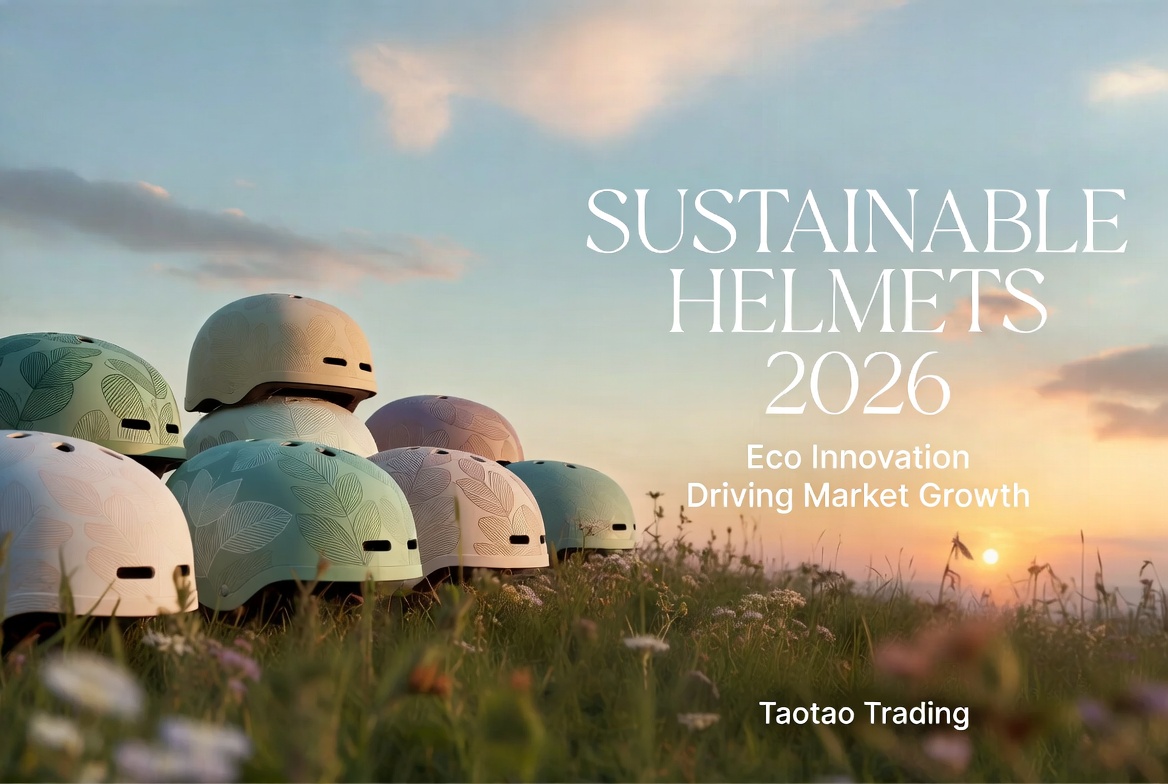
The helmet industry is undergoing a green transformation in 2026. Sustainability is no longer a marketing buzzword — it has become a powerful driver of innovation, consumer preference, and market expansion.
As environmental consciousness rises among riders, workers, athletes, and corporate buyers, manufacturers are responding with helmets that deliver uncompromising safety while significantly reducing ecological impact.
Market Momentum The broader global helmets market is increasingly influenced by sustainability demands. While exact figures for “sustainable helmets” are still emerging as a distinct category, analysts note that eco-friendly variants are growing 2–3 times faster than the overall market.
The global safety helmets market is projected to reach USD 9.44 billion by 2033, with sustainable materials and circular design principles contributing meaningfully to premium segment growth. In cycling and motorcycle categories, brands offering recycled or bio-based helmets are seeing stronger online engagement and higher customer loyalty scores.
Key Eco-Innovations Shaping 2026
1. Recycled Polycarbonate and Advanced Composites Leading manufacturers are now producing helmet shells from 100% recycled polycarbonate sourced from post-consumer waste. These materials maintain the high impact resistance required for certifications such as ECE 22.06, CPSC, and EN 1078. Some premium models incorporate up to 90% recycled content across shell, foam, and straps without compromising performance.
2. Bio-Based and Plant-Derived Materials Innovative companies are replacing traditional petroleum-based foams with bio-EPS or plant-derived alternatives made from corn starch, sugarcane, or castor oil. These bio-foams offer comparable energy absorption while lowering the carbon footprint by 30–60% compared to conventional options.
3. Circular Design Principles Forward-thinking brands are adopting modular designs that allow easy replacement of visors, liners, and straps, extending product lifespan and reducing waste. Take-back programs and helmet recycling initiatives are expanding, particularly in Europe and North America, where consumers can return end-of-life helmets for material recovery.
4. Low-Impact Manufacturing Solar-powered factories, water-efficient dyeing processes for straps and graphics, and reduced packaging are becoming standard practices among top-tier manufacturers. Carbon footprint labeling is gaining traction, allowing buyers to make informed decisions.
Regional Leadership and Consumer Trends Europe leads the sustainable helmet movement, driven by strict ESG regulations and environmentally aware consumers. Brands in the Netherlands, Germany, and Scandinavia are setting benchmarks with fully traceable supply chains. North America follows closely, with strong demand from urban cyclists and corporate fleets seeking to meet sustainability targets. Asia-Pacific, while still dominated by volume production, is showing rapid progress through government green initiatives and rising middle-class preference for eco-friendly products.
Parents are particularly influential in the kids’ helmet segment, where sustainable materials combined with fun designs create powerful emotional appeal. Industrial buyers are increasingly including sustainability criteria in procurement tenders, especially in construction and manufacturing sectors.
Challenges on the Road to Sustainability Higher production costs for premium eco-materials remain a barrier for mass-market adoption. Ensuring consistent performance and certification compliance with recycled content is technically demanding. Additionally, consumer education is vital — many buyers still perceive “green” helmets as less safe, despite evidence to the contrary.
The Business Case for 2026 and Beyond Companies investing in sustainable helmets are not only reducing environmental impact but also future-proofing their businesses. They benefit from stronger brand reputation, access to premium pricing, and better relationships with regulators and large corporate clients. Early adopters report improved customer retention and positive media coverage.
Actionable Recommendations
- For Consumers: Look for helmets with clear recycled content percentages, third-party sustainability certifications, and transparent supply chain information.
- For Fleet & Procurement Managers: Include ESG metrics in your helmet purchasing criteria — the long-term savings from durable, recyclable products often outweigh initial costs.
- For Manufacturers & Brands: Accelerate R&D in bio-materials and circular systems. Communicate your sustainability journey authentically through storytelling and verifiable data.
In 2026, the most successful helmet companies will be those that prove you can protect people today while protecting the planet for tomorrow. Eco-innovation is not just good ethics — it is becoming smart business strategy in the global head protection market. The future belongs to helmets that are safer, lighter, and greener.