Jun 26, 2026Industry Insights
Helmet Visors & Materials 2026: Innovation in Protection & Sustainability
The helmet visor and materials sector is experiencing a dynamic transformation in 2026, driven by advancements in optical technology, lightweight composites, and a strong push toward sustainability. A
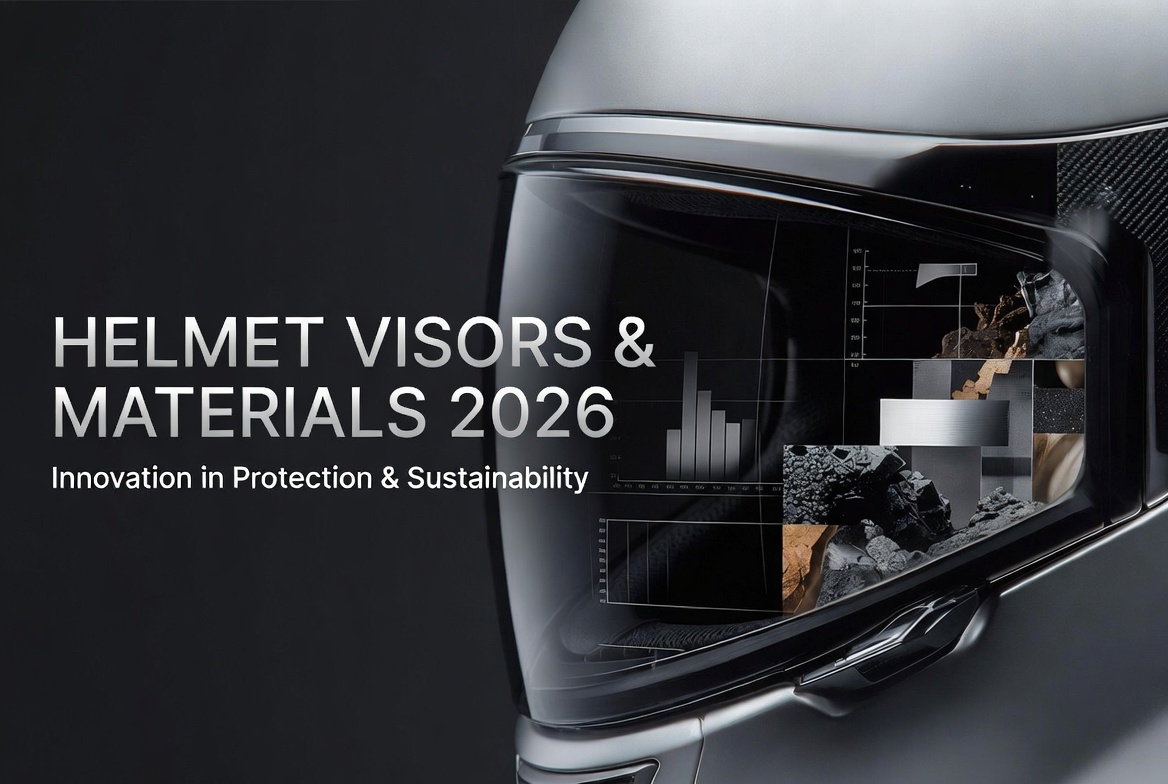
The helmet visor and materials sector is experiencing a dynamic transformation in 2026, driven by advancements in optical technology, lightweight composites, and a strong push toward sustainability. As riders, workers, and athletes demand better visibility, comfort, and environmental responsibility, manufacturers are delivering solutions that enhance protection without compromising on performance or planet-friendly practices.
The Visor Market: Clear Growth Ahead
The global motorcycle helmet visor market alone was valued at approximately USD 2.13 billion in 2024 and is projected to reach USD 3.5 billion by 2035, growing at a steady CAGR of 4.6%. This growth extends across cycling, industrial, and sports helmets, where visors play a critical role in user safety and comfort. Key innovations include anti-fog and anti-scratch coatings, UV protection, and adaptive tinting technologies that address real-world riding and working conditions.
Leading the charge are photochromic visors. Technologies like Shark’s IRID liquid crystal system and Transitions Shields can shift from clear to dark in under one second using solar power — no batteries required. These adaptive visors provide seamless transitions across lighting conditions, reducing glare and eye strain while maintaining excellent optical clarity. They are particularly popular in motorcycle touring, adventure riding, and multi-sport applications.
Material Innovations: Stronger, Lighter, Greener
Polycarbonate remains the dominant material for visors and entry-level helmet shells due to its superior impact resistance, optical clarity, and cost-effectiveness. However, premium segments are shifting toward advanced composites. Carbon fiber and fiberglass-reinforced shells offer exceptional strength-to-weight ratios, making high-end helmets significantly lighter while meeting stringent standards like ECE 22.06 and Snell.
Sustainability is no longer a niche trend — it is becoming mainstream. Manufacturers are increasingly using recycled polycarbonate, bio-based foams, and post-consumer recycled materials. For example, brands are producing visors from 100% recycled polycarbonate and incorporating natural fibers like bamboo in liners. Some companies report meaningful CO₂ reductions through these practices, with recycled materials cutting emissions by 5–8% per unit compared to virgin alternatives.
In cycling and snow sports, helmets using up to 90% recycled content (polycarbonate shells, EPS foams, and straps) are now available without sacrificing safety certifications. These developments appeal strongly to eco-conscious consumers and help brands meet evolving ESG expectations from regulators and corporate buyers.
Challenges and Opportunities
Despite progress, challenges persist. Supply chain volatility for high-performance materials, higher costs for sustainable options, and the persistent issue of counterfeit visors with inferior coatings remain hurdles. However, opportunities abound for brands that combine innovation with transparency — such as providing QR codes for material traceability or certification verification.
Actionable Insights for 2026
- For Riders & Buyers: Prioritize visors with anti-fog coatings and photochromic technology for versatility. Check for recycled content labels if sustainability matters to you.
- For Fleet Operators & Procurement: Look for durable, multi-certified materials that reduce replacement frequency and support ESG goals.
- For Manufacturers & Distributors: Invest in R&D around adaptive optics and circular materials. Educate customers on the long-term value of premium, sustainable solutions.
The convergence of protection, performance, and planetary responsibility is reshaping the helmet industry.
In 2026, the most successful players will be those who deliver visors and materials that not only protect users today but also safeguard the environment for tomorrow. As regulations tighten and consumer expectations rise, innovation in this space will continue to accelerate — offering exciting opportunities for the entire value chain.