Jul 6, 2026Industry Insights
The Rise of AR and HUD in Motorcycle Helmets: 2026 Marks the Tipping Point
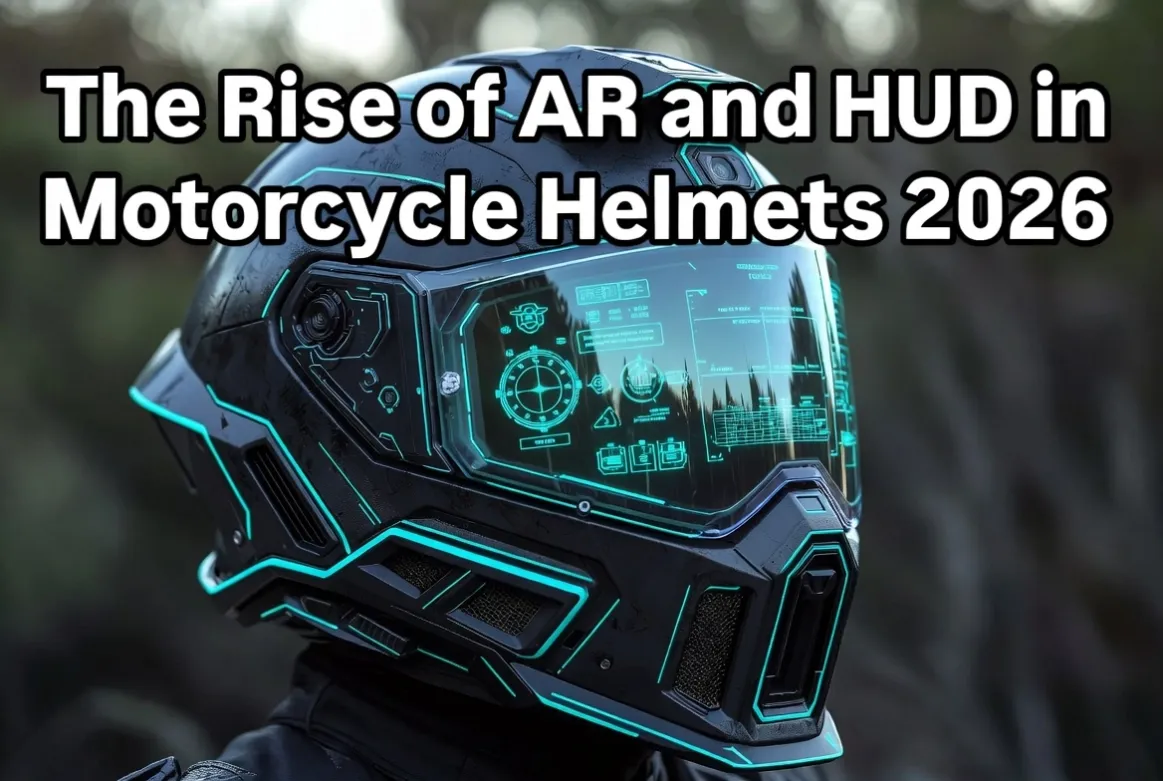
For years, the promise of a motorcycle helmet that projects navigation, speed, calls, and hazard alerts directly into your line of sight felt like science fiction. Early experiments fizzled. Add-on modules were clunky. Major brands stayed cautious. But in 2026, that changes decisively.
The convergence of miniaturized high-brightness displays, mature smartphone integration, and—most importantly—the entry of a legendary premium manufacturer has turned AR (Augmented Reality) and HUD (Heads-Up Display) technology from niche gadget into a credible, production-ready feature. 2026 is not just another year of incremental progress. It is the inflection point where smart helmets move from the fringes into the mainstream premium segment.
The Breakthrough: Shoei GT-Air 3 Smart
The single biggest catalyst is Shoei’s GT-Air 3 Smart, developed in partnership with French display specialists EyeLights. This is not a Kickstarter prototype or a limited-run novelty. It is a full-production helmet from one of the world’s most respected manufacturers, built on the proven GT-Air 3 platform and fully ECE 22.06 homologated.
Key technical highlights include:
- Full HD Nano-OLED HUD integrated directly into the drop-down sun visor.
- Information (turn-by-turn navigation with mini-map, speed, calls, music, notifications) is projected approximately 3 meters in front of the rider—far enough to keep eyes focused on the road while still being instantly readable.
- Phone-connected via a dedicated app (iOS/Android) with seamless Google Assistant / Siri voice control.
- Built-in premium intercom with unlimited range via phone connectivity and offline mesh mode.
- Approximately 10 hours of battery life.
- Pre-order pricing around €1,199, with deliveries beginning mid-2026.
Industry observers note that the 32% improvement in reaction time claimed by EyeLights comes from eliminating the need to look down at a phone or tank-mounted device. For a touring or adventure rider, that single improvement can be transformative on long days in unfamiliar territory.
This is the moment HUD technology graduates from “interesting concept” to “available on a Shoei.” That carries enormous weight in a conservative industry where rider trust is everything.
Other Contenders Pushing the Envelope
Shoei’s move has accelerated the entire category. Several other players are already delivering compelling AR/HUD experiences in 2026:
- CrossHelmet X1 — Features a built-in HUD combined with a rear camera system that effectively gives riders a near-360° view. The display overlays navigation and key data while the camera reduces blind spots.
- Intelligent Cranium Helmets (Lander) — Offers a crisp 1080p full-color HUD, dual rear cameras, proximity sensors, and crash detection with emergency alerts.
- Jarvish / Jarvis XR series — Positioned as more aggressive AR platforms with transparent heads-up displays and strong AI-assisted features.
These systems increasingly blend true AR (contextual overlays that can highlight hazards or paint lane guidance) with traditional HUD information (speed, nav arrows, notifications). The distinction is blurring fast.
Why 2026 Is the Tipping Point
Several forces have aligned:
- Display Technology Maturity — Nano-OLED and advanced waveguide optics now deliver bright, readable images even in direct sunlight without excessive bulk or power draw.
- Miniaturization & Power Efficiency — Battery life has moved from “two hours if you’re lucky” to a practical full-day range for most riders.
- Smartphone Ecosystem Lock-in — Riders already carry powerful computers in their pockets. Modern helmets simply become elegant displays and interfaces rather than trying to duplicate phone functionality.
- Safety Data & Regulatory Tailwinds — Growing evidence that reducing eyes-off-road time improves reaction times, combined with increasing focus on rider assistance systems.
- Brand Legitimacy — When Shoei puts its name on an integrated HUD helmet, the technology stops being fringe and starts being premium. That changes dealer conversations, insurance discussions, and rider perception overnight.
- Explosive Market Growth — The broader smart/connected helmet segment is expanding at CAGRs between 13.9% and 18.5% depending on the report, with the dedicated HUD helmet subset growing even faster.
Real Benefits Riders Actually Feel
Beyond the specs, early adopters and beta testers consistently report:
- Dramatically reduced “phone glance” behavior on long rides.
- Much smoother group communication via always-on intercom.
- The psychological comfort of knowing rear traffic or potential hazards are being monitored.
- Better navigation adherence because directions appear exactly where you’re already looking.
The technology does not replace situational awareness—it augments it.
Challenges That Remain
No honest analysis would ignore the hurdles:
- Cost — These are still premium products (€1,000–2,000+ range).
- Weight & Bulk — Every added component has to fight against the constant industry push for lighter helmets.
- Distraction Risk — Poorly implemented interfaces could create new problems. The best systems keep information glanceable and non-intrusive.
- Durability & Crash Performance — Electronic components must survive real-world abuse and not compromise the helmet’s protective structure.
- Ecosystem Fragmentation — Intercom compatibility and app ecosystems are still maturing.
What Comes Next (2027 and Beyond)
The 2026 wave is just the beginning. Expect rapid iteration:
- Deeper integration with motorcycle electronics (V2X communication).
- More sophisticated AR overlays (lane departure guidance, highlighted obstacles, weather overlays).
- AI that doesn’t just display data but predicts and alerts (e.g., “sharp curve ahead + gravel reported”).
- Broader adoption in mid-tier helmets as component costs fall.
By the end of the decade, a helmet without some form of smart display capability may feel as outdated as a helmet without a drop-down sun visor feels today.
The Bottom Line
2026 is not the year every rider will suddenly own an AR/HUD helmet. It is the year the technology stops being a curiosity and becomes a legitimate, production-proven option from a brand riders already trust. That shift in perception and availability is what makes this the tipping point.
The future of motorcycling isn’t just about faster bikes or better tires. It’s about giving riders more information, more safely, without ever having to look away from the road. In 2026, that future arrives in showrooms.
Ride smart. Ride aware. The road ahead has never been clearer.